
Make your own snot
Snot can be gross, but it’s really interesting to scientists.

This activity will take 30 minutes, is for ages 7+ with supervision needed.
When you stop to think about it, poo is one of the most amazing, if not disgusting, things your body makes. In just over a day, your body takes in the things you need from your food – protein, fats, vitamins and minerals – and then nicely packages up the waste as poo.
Step 1 of 14
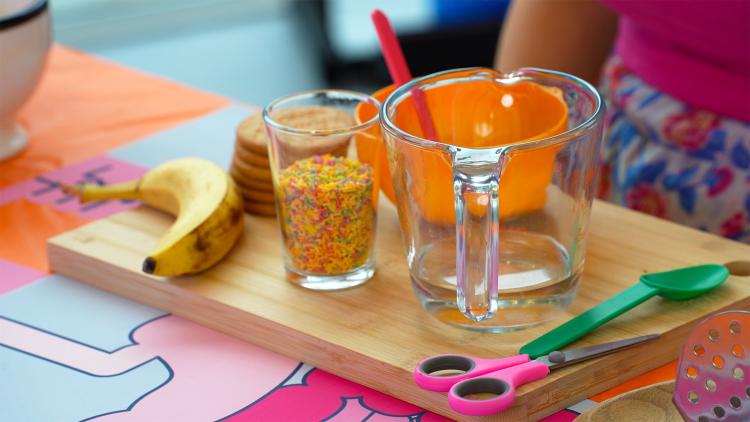
Check the kit list above and get everything ready, before things get messy.
Step 2 of 14
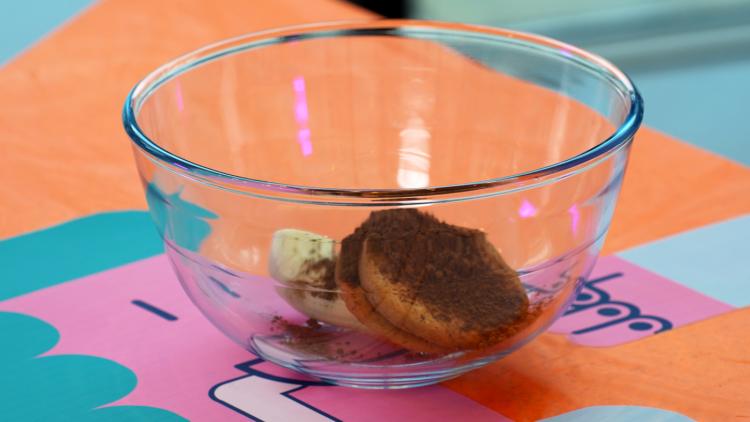
Put half a banana, 3 biscuits and 1 teaspoon of cocoa powder into a bowl.
Step 3 of 14
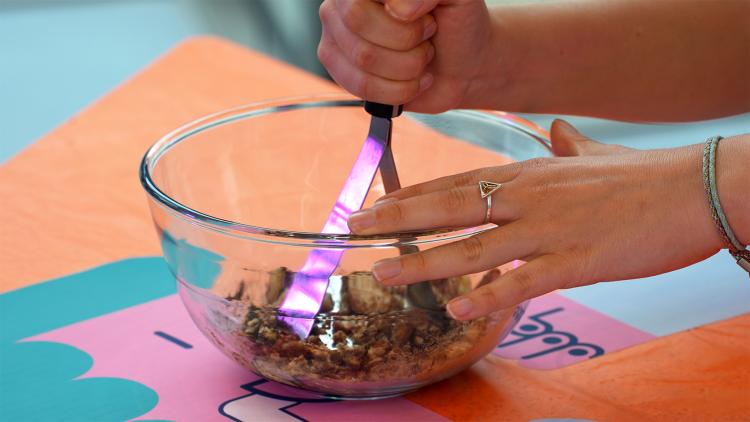
Use a masher to break up the ingredients. This step represents how your food gets mashed up by your teeth and the roof of your mouth.
Step 4 of 14
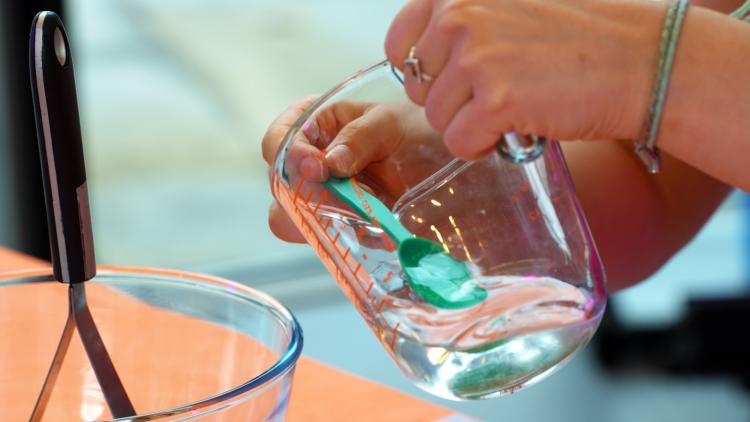
Put half a teaspoon of water in your mixture and mash it up again. The water represents your saliva – it makes food easier to chew and swallow.
Step 5 of 14
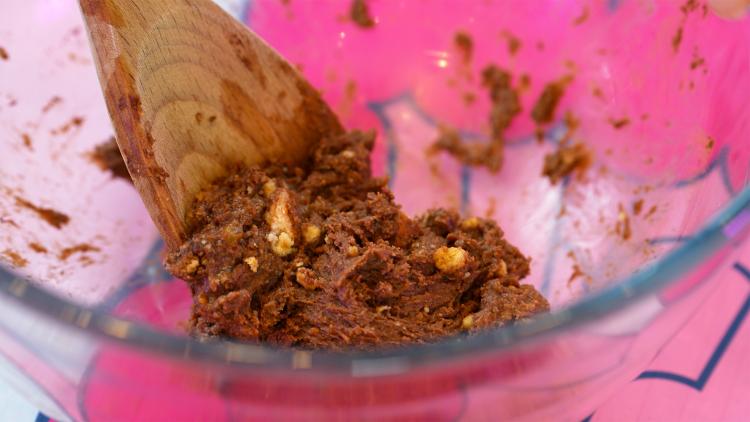
Add another teaspoon of water to your mixture. This time the water represents the digestive juices that food meets in your stomach and small intestine. Then, mix it all up with a wooden spoon.
Step 6 of 14
Put your mixture onto a piece of kitchen roll, wrap it up and give it a gentle squeeze. You should feel the kitchen roll start to get damp as it absorbs water from the mixture. This represents how water is absorbed from our poo as it moves along our intestines.
Step 7 of 14
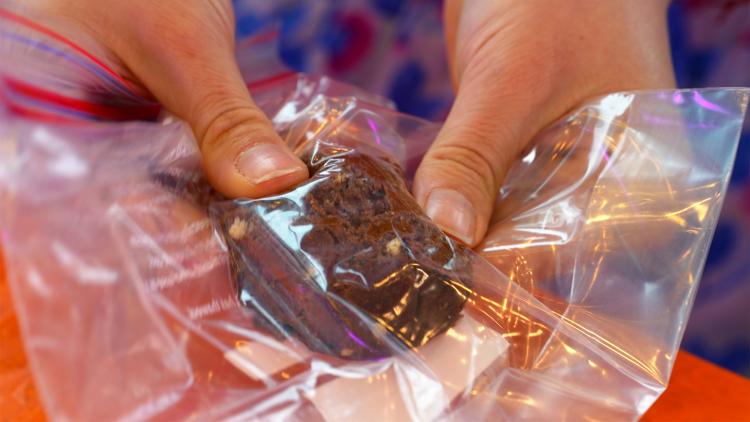
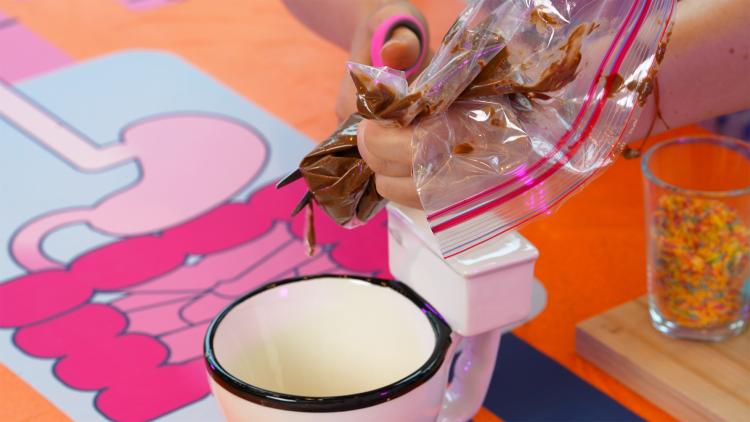
Squeeze the mixture into one corner of the sandwich bag.
Step 8 of 14
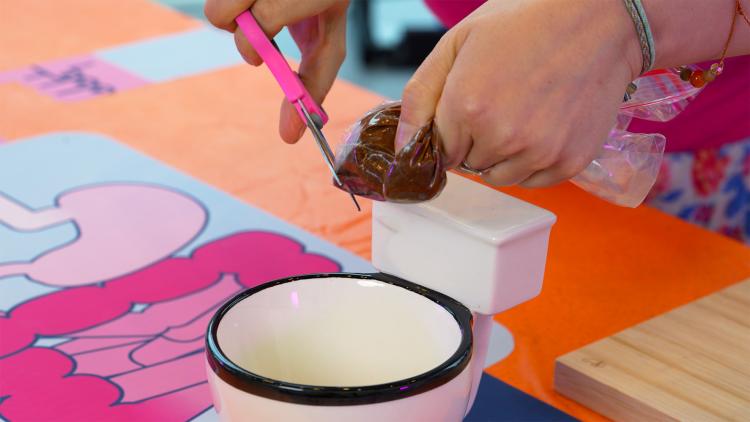
Use scissors to carefully cut a small hole in the corner of the sandwich bag.
Step 9 of 14
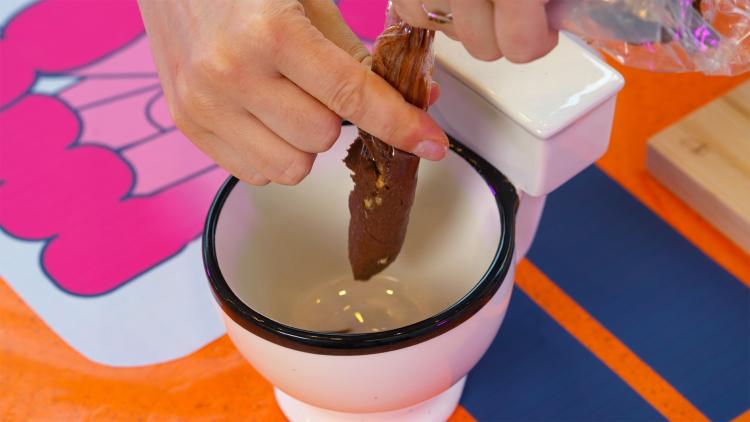
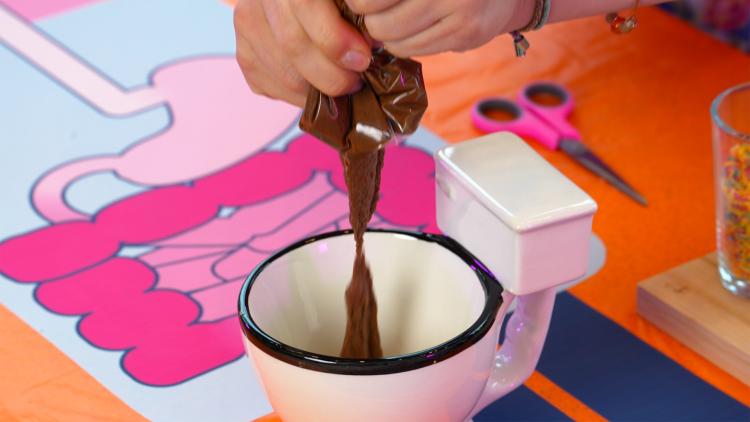
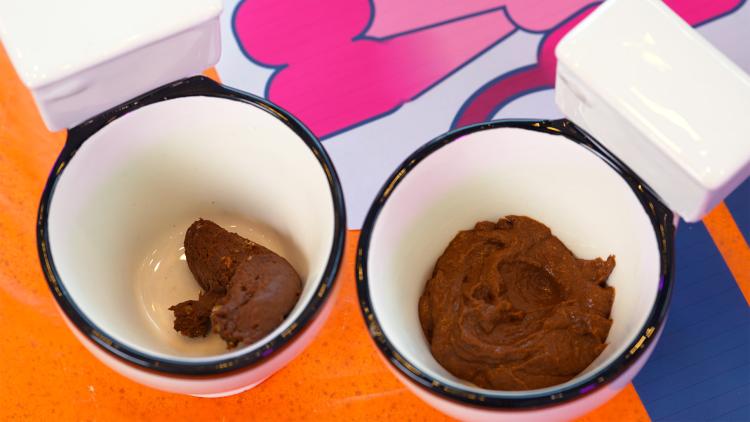
Squeeze your fake poo out of the sandwich bag and into a mug. Try and make your fake poo look realistic – the curlier the better!
Step 10 of 14
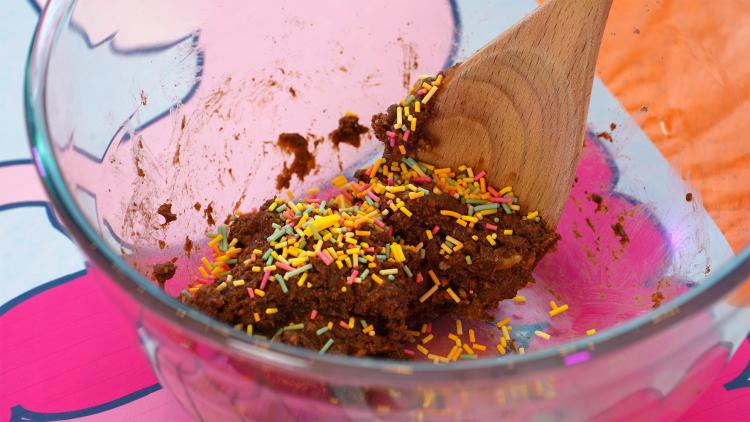
You can get even messier by making fake diarrhoea. Repeat steps 2-5, and then add some sprinkles to your mixture. The sprinkles represent parasites, the germs that can sometimes cause diarrhoea if we accidentally swallow them.
Step 11 of 14
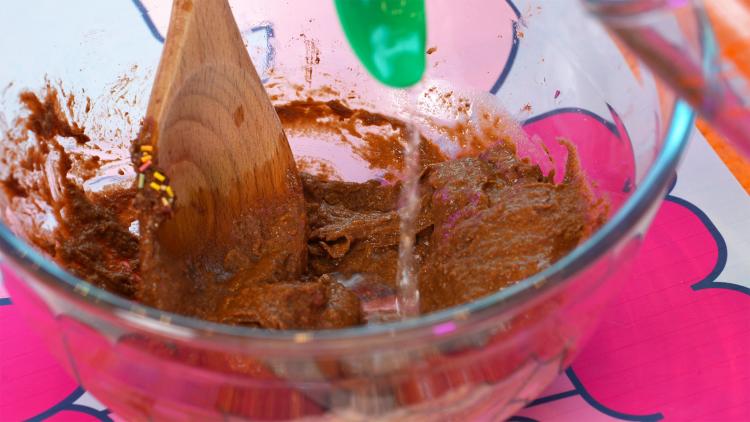
Put many teaspoons of water into your mixture and stir it with a wooden spoon. The mixture should look runny – we think 6 teaspoons does the trick.
Step 12 of 14
Spoon your diarrhoea mixture into a plastic sandwich bag, squeeze the mixture into one corner and snip a small hole in the corner.
Step 13 of 14
Squeeze your fake diarrhoea out of the sandwich bag and into a mug. Yuck!
Step 14 of 14
You should have made some lovely fake poo and diarrhoea. Why do you think they look different to each other? Think about how you could experiment with different ingredients to change the texture of your fake poo.
A lot of things happen to your food on its journey through your body. As food moves through you, it's broken into smaller and smaller pieces. Your food is first chopped up by your teeth as you chew. Acids in your stomach then break it down even more.
You use a lot of muscles as you digest. Muscles make your mouth chew, churn the contents of your stomach, squish food along your intestines and finally poop the leftovers out at the end of the journey.
But, it's not just muscle power that digests your food, you are helped by trillions of tiny, friendly bacteria in your intestines who digest some parts of your food that your body can't, such as plant fibres.

Unfortunately, not all of the microbes that find their way into your digestive system are friendly. Some of these are parasites that can damage the walls of your intestines, stopping them from absorbing water and nutrients. This is one of the causes of diarrhoea, like you saw when making your glittery parasite poo.
Scientists at the Crick are studying parasites that live in human intestines. Parasites like Cryptospridium, one of the most common parasites in the world, affect hundreds of millions of people every year.