
Make a science spinner
Create a spinning toy that spins so fast it tricks your brain.

This activity will take 15 minutes, is for ages 7+ with no supervision needed.
All the proteins that make up our bodies are made from a code written in our DNA.
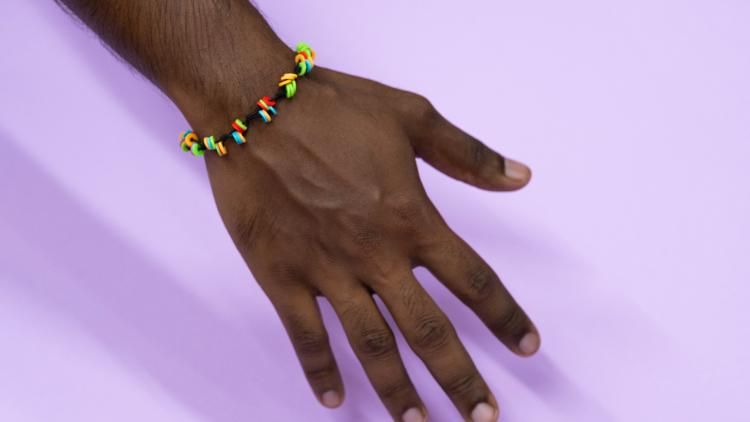
Here, you can turn the genetic code for an important feel-good hormone, oxytocin, into a bracelet or necklace.

Step 1 of 7
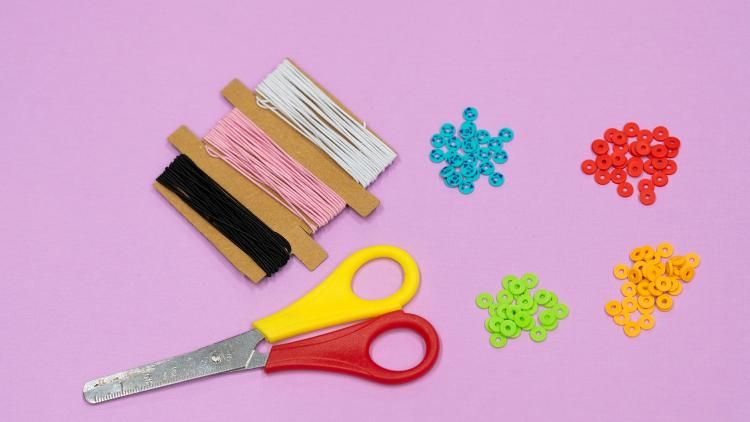
Cut your elastic into two same-sized pieces that easily would fit around your wrist. Add a little extra for knots.
Step 2 of 7
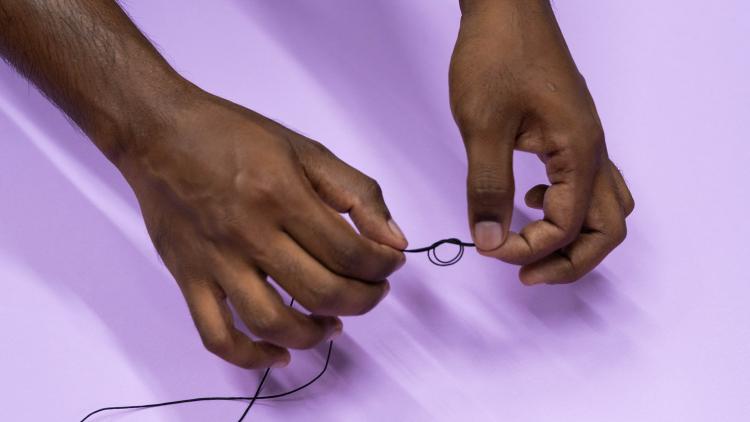
Make sure the beads cannot slip past your knot.
Step 3 of 7
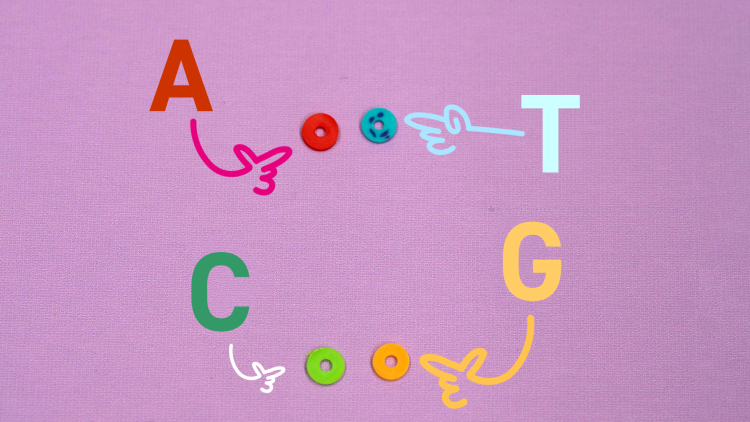
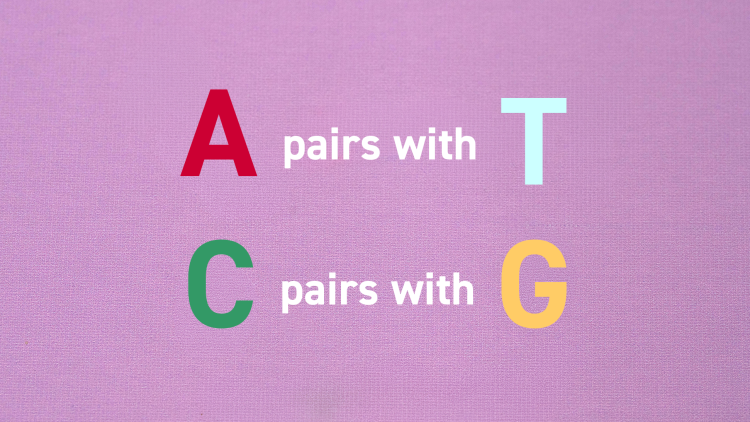
DNA is made up of four base molecules: adenine, cytosine, guanine and thymine (A, C, G and T for short). These always pair together in the same way: A goes with T, and C goes with G.
Step 4 of 7
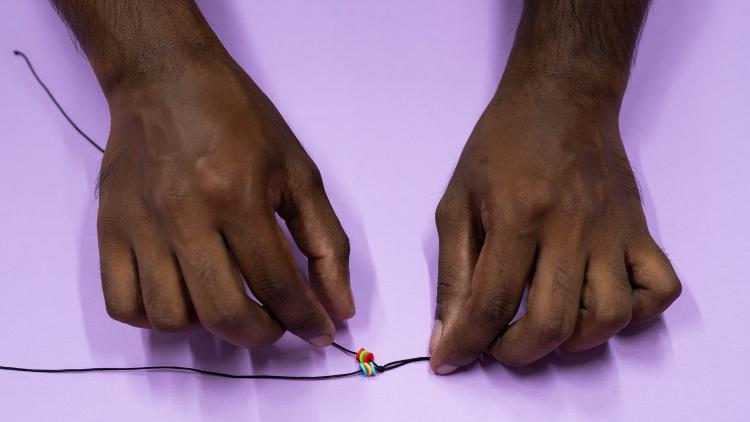
Look at the genetic code for oxytocin and start to thread the genetic code. On the first elastic, thread the base sequence.
Step 5 of 7
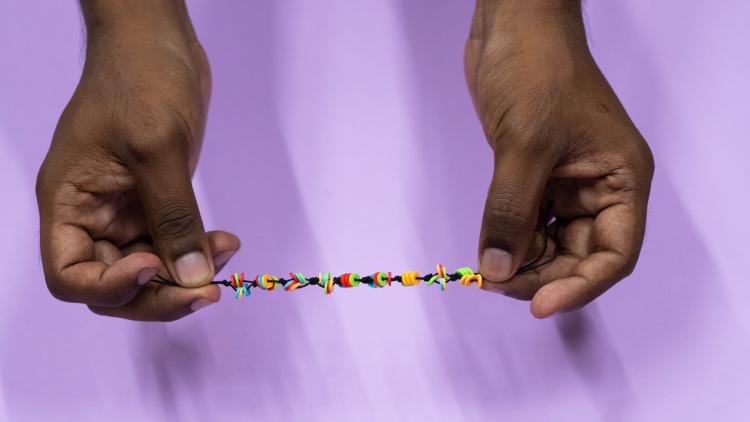
After you have threaded the DNA code on the first thread, you can start to build your double helix. On the second piece of elastic, thread the base pairs. Remember A goes with T and G goes with with C.
Step 6 of 7
Keep going until the bracelet is the size you would like – we tied a knot in the elastic after every three base pairs. You might reach your bracelet length before the end of the protein code, so don’t worry if this happens.
Step 7 of 7
The DNA double helix is a twisted ladder made of two strands wound around each other. The base pairs form the rungs, where adenine (A) always pairs with thymine (T) and cytosine (C) always pairs with guanine (G).
In a DNA sequence, three bases together are known as a codon and they code for one amino acid.
In our bodies, oxytocin is a small but important hormone made in our brains. It makes us feel happy and socially bonded. If you pat a pet animal, your levels of oxytocin will increase and so will the pet’s!
In our bodies, oxytocin is made as a bigger molecule and then cut into a smaller, nine amino acid protein to become oxytocin.
The genetic code for oxytocin (and the animo acids that each codon makes) is: