




What's a 3D printer?
Let's find out how 3D printers work.

This activity will take 60 minutes, is for ages 7+ with supervision needed.
Have you ever used sunlight to make a picture? By placing leaves on a special type of paper and putting them in the sun, you can create beautiful sun prints.


Step 1 of 9
Turmeric can stain your work surface and clothes yellow! It's a good idea to cover the area with newspaper or kitchen roll and wear an apron or old clothes.
Step 2 of 9
Explore your local park, garden or doorstep and look for leaves and flowers of different shapes and sizes to arrange. The time of year will influence what you will be able to find. You could compare what you find in summer to what you find in autumn.
Step 3 of 9
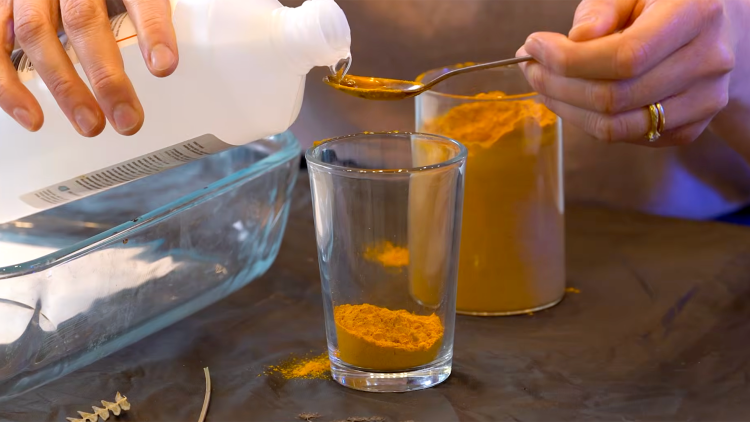
Put 3 teaspoons of turmeric and 12 teaspoons of surgical spirit into a glass, give it a good mix and then leave it to settle for a minute.
Step 4 of 9
Put a piece of kitchen roll into the mouth of another glass so that it can act as a filter. Pour your turmeric mixture onto the filter and wait a few minutes for all of the liquid to drip through to the glass. Then, carefully remove the filter that's holding the turmeric powder and put it in the bin.
Step 5 of 9
Pour your turmeric liquid into a glass dish and then drop a piece of thick paper into it. You can cut your paper up into whatever size and shape you like. The paper will soak up the liquid and change from white to a sunny-yellow colour. Repeat this step to coat as many pieces of paper as you can.
Step 6 of 9
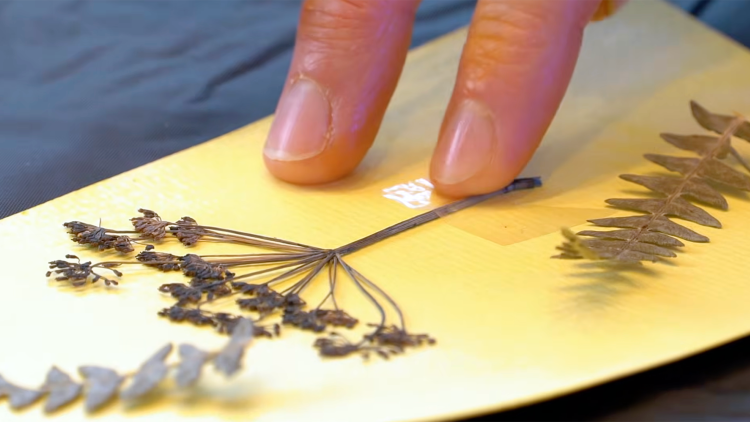
Be as artistic as you like when you arrange your leaves and flowers on your paper.
Step 7 of 9
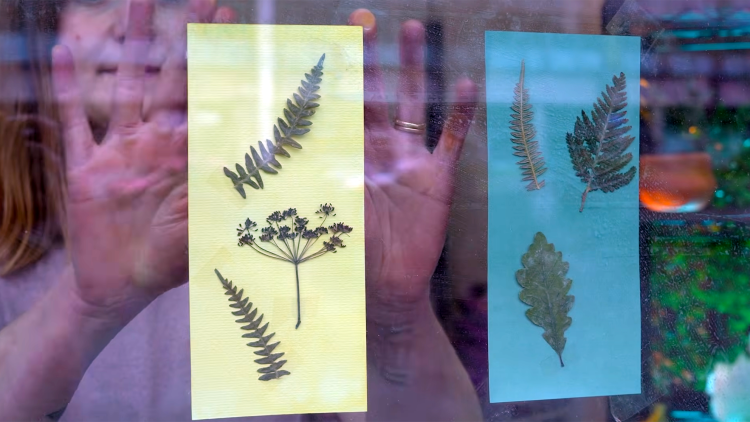
You can tape your prints to a window, or leave them outside if it isn't going to rain.
Your prints are ready when the paper changes colour.
You can experiment with how long you leave your prints – on a cloudy day we left our prints on the window for four days! On a really sunny day it will take much less time than that to change colour.
Step 8 of 9
Your print will keep changing colour in the sun, to stop this, dunk them in a solution of 60mL of warm water and 2 tablespoons of bicarb, dry, and this will stop the colour from changing furthur.
You can also place your prints inside a book where they cannot be touched by any sunlight.
If you used cyanotype paper, just rinse them with water to fix the colour.
Step 9 of 9
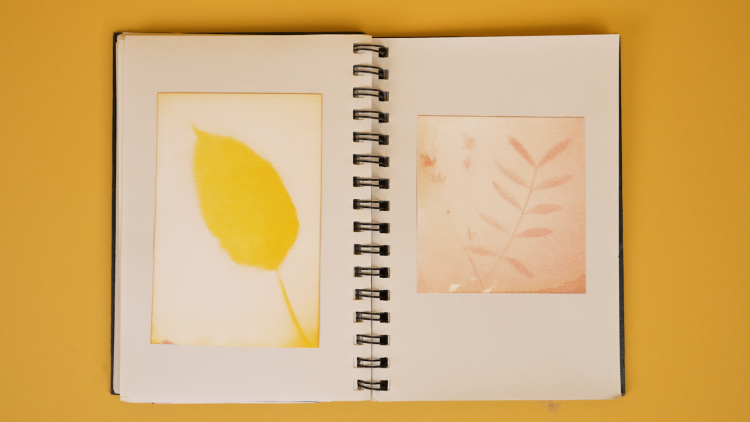
These are sun-sational!

The paper will change colour when it's exposed to sunlight because the ultraviolet (UV) rays in sunlight break down the colourful turmeric molecules. The paper hidden under the leaf doesn't change colour, so when you remove your leaf, its shape will stay on the paper.
In this activity you have made your own 'anthotype' paper using turmeric. You can also buy 'cyanotype' paper (a special kind of light-sensitive paper) to make sun prints.
The fun part is experimenting with different leaves and amounts of sunlight to see what prints you can create.
In the 1800s, a scientist called Anna Atkins used cyanotype paper to make hundreds of beautiful images of plants.


When scientists run their experiments they do lots of tests, changing one thing in each test to see what effect the change will have on the thing they're measuring. Making sun prints is just like doing science.
You change something – like the amount of time you leave your prints out in the sun – and then observe what difference it makes to your sun print. You note down your results, learn from them and then think about how you can change your sun print next time.