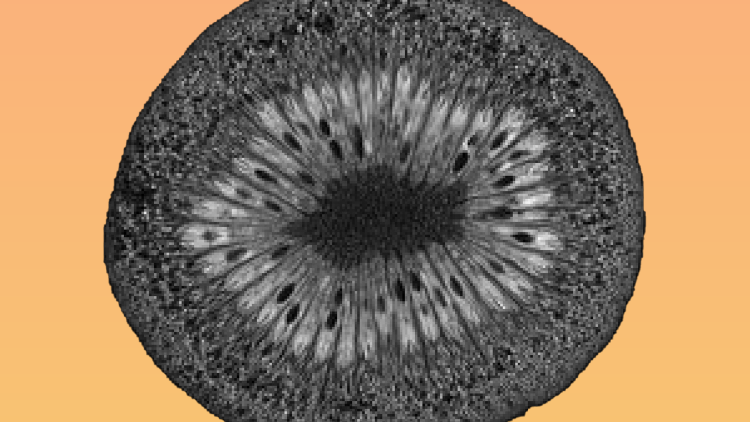
Seeing inside fruits
Take the quiz to find out how well you know the insides of fruits.

This activity will take 5 minutes, is for all ages with no supervision needed.
If we find a very old dog-like skull or bone, it’s hard to know just by looking at it if it belonged to a dog or a wolf. This is because domesticated dogs share a common ancestor with wolves, so the bones of an ancient dog look pretty similar to that of a wolf.
Around 15,000 years ago, dogs became genetically different enough from wolves to be able to tell them apart by looking at their DNA. So, to find out what an old bone or tooth belonged to, researchers have to look at the ancient DNA found inside.



Researchers at the Crick analysed DNA from 216 canid skeletal remains from across Europe. Out of these 181 were so old they were alive before humans started farming, around 10,000 years ago.
From these, they found the very old remains of a dog that was alive 14,200 years ago. It was found in a cave in Switzerland. This dog is one of the oldest records of a domesticated dog, along with a 15,800 year old dog bone from Türkiye.